Harmonix Finance
Yield infrastructure built natively on Hyperliquid. Learn the fundamentals, explore our products, and start building.
Getting Started
Set up your wallet and connect to the Harmonix app in minutes.
1. Set Up Your Wallet
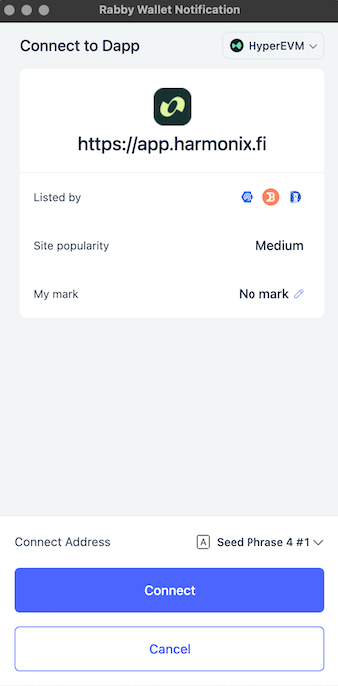
If you don't already have a wallet, download Rabby Wallet from your browser. Rabby is the recommended wallet for Harmonix — it supports Hyperliquid natively and gives you a clear view of approvals and transaction risks.
You can set up a new wallet directly in Rabby or import an existing one using a seed phrase. Follow the Rabby setup guide if you need help with the initial configuration.
- Built-in support for Hyperliquid EVM and HyperCore
- Pre-transaction simulation — see what will happen before signing
- Clear approval management and risk warnings
- Available as a Chrome/Brave/Firefox extension
2. Connect to Harmonix
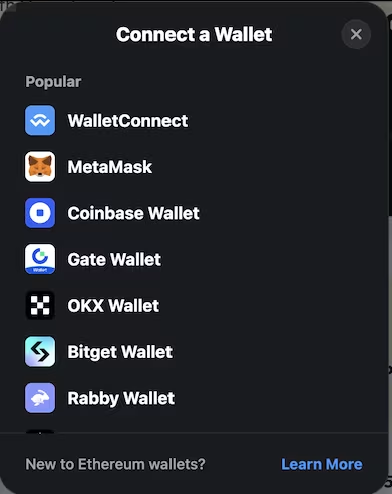
Once Rabby is installed and your wallet is set up, follow these steps to connect to the Harmonix app:
3. What's Next
Now that you're connected, here are the most common next steps:
Core Concepts
The key topics every new contributor, integrator, or community member should understand to work effectively with the Harmonix protocol.
Vault Mechanics 101
Harmonix vaults use the ERC-4626 standard to manage deposits, shares, NAV (net asset value), exchange rates, and withdrawals. Users deposit assets, receive yield-bearing shares, and redeem them later at a higher price-per-share as yield accrues.
ERC-4626 · share price · NAV · assets · liabilities · deposit · redeem
Delta-Neutral Strategies 101
Harmonix uses delta-neutral strategies to reduce directional exposure while capturing market-driven returns — mainly through spot-perp positioning, funding rate capture, and related basis opportunities.
long spot · short perp · delta-neutral · carry trade · basis trade · funding rates · market regimes
Funding Rates and Market Regimes
Harmonix focuses on market conditions where funding and trading activity are strong enough to support attractive returns, while also monitoring periods when funding compresses and strategy performance becomes less favorable.
funding rates · positive funding · negative funding · market regimes · volatility · trading activity · funding compression · perp demand · open interest
HyperCore vs HyperEVM vs HIP-3
Harmonix uses HyperCore as the trading layer where perp-driven yield opportunities are created, and HyperEVM as the application layer where DeFi integrations, vault logic, and yield-bearing product structures are built.
HyperCore · HyperEVM · trading layer · app layer · perp venue · DeFi integrations · vault infrastructure · execution layer
Underlying Asset Primitives
Harmonix structures products around assets such as HYPE, kHYPE, stHYPE, BTC, ETH, and stablecoins, using each asset based on its role in staking, trading, collateral, or yield optimization strategies.
HYPE · kHYPE · stHYPE · BTC · ETH · stablecoins · LST · collateral · yield-bearing assets · asset primitives
Yield-Bearing Stablecoins
Harmonix turns stablecoins like USDC, USDH, and USDT into yield-bearing products by routing them into market-neutral and DeFi-native strategies, allowing users to keep stablecoin exposure while earning through vault share growth over time.
yield-bearing stablecoins · stablecoin vaults · ERC-4626 · delta-neutral · dollar-denominated yield · exchange rate · vault share growth
ERC-4626 Vault Standard
Vault products are built around the ERC-4626 standard so deposits, shares, asset accounting, and yield accrual follow a structured and composable framework across DeFi integrations.
ERC-4626 · tokenized vault standard · vault shares · assets under management · deposit · redeem · share accounting · composability · yield-bearing vaults
ERC-7540 Async Vaults
ERC-7540 is the official async extension of ERC-4626. Withdrawals run through three phases: request, fulfill, claim. The user requests a redeem, locking shares at the current PPS; an operator fulfills the request from the vault; the user then claims their assets. The asset amount is locked at request-time, with no re-pricing later. Async withdrawal fits delta-neutral strategies that take time to unwind cleanly. Deposits stay synchronous.
ERC-7540 · async vault · request · fulfill · claim · sync deposit · async withdraw · operator
ERC-7575 Multi-Asset Deposits
ERC-7575 lets a single vault accept multiple deposit assets without wrapper contracts. In haUSDC, both USDC and USDe deposit into the same vault, are priced on a unified PPS through a USDe/USDC rate oracle, and settle into one haUSDC share token. USDe holders earn from HIP-3 markets — a higher-yield alternative to sUSDe with points exposure stacked on top.
ERC-7575 · multi-asset vault · USDC · USDe · unified PPS · rate oracle · single share token
CoreWriter Bridge
CoreWriter is the bridge between HyperEVM and HyperCore. It routes capital across spot venues and perp shorts without manual ops, keeping the delta-neutral legs balanced as positions move. In haUSDC, CoreWriter is wired for the delta-neutral engine and is in beta for Portfolio Margin.
CoreWriter · HyperEVM ↔ HyperCore · automated routing · delta-neutral engine · portfolio margin
HIP-3 Market Coverage
haUSDC routes exposure across five markets on Hyperliquid: Hyperliquid itself as the perp venue for the short leg, plus four HIP-3 spot markets — TradeXYZ, Hyena, Felix, and Markets.xyz — for the long legs and points exposure. Felix Spot Equities, live since February 2026, unlock funding-rate yield, HIP-3 market exposure, and partner points in one position.
HIP-3 · TradeXYZ · Hyena · Felix Spot Equities · Markets.xyz · long spot · short perp · partner points
Portfolio Margin via CoreWriter
Portfolio Margin via CoreWriter runs in beta at 20–30% allocation. It adds roughly 2% net safe yield on top of the base, plus exposure to one of the Hyperliquid Season 3 incentive conditions. PM is additive — the funding-rate delta-neutral engine remains the primary yield source.
portfolio margin · S3 incentives · additive yield · cross-margining · CoreWriter beta
Vault Security Model
Four protections sit at the vault level: secure share minting (sensitive operations gated by delayed execution — a compromised admin key cannot execute instantly), PPS deviation cap (share prices capped within a configured 50–200 bps range, with real asset backing enforced via yield-bearing tokens), NAV staleness gate (transactions revert if total-asset data is too old), and anomaly freeze (deposits and withdrawals can be instantly frozen when anomalies are detected). Defensive actions are fast; recovery actions go through a timelock. See Risks & Audits → Vault Security Model ↗ for the full breakdown including multisig roles.
delayed execution · PPS cap · NAV staleness · anomaly freeze · multisig · timelock · sentinel
Proof of Funds via DeBank
Every depositor can verify their position end-to-end without trusting Harmonix dashboards. DeBank surfaces proof of funds, full deposit and withdrawal activity, and realized APY across 7-, 15-, 30-, and 45-day windows. If you cannot verify it on chain, it is not real.
DeBank · proof of funds · independent verification · realized APY · 45-day window
Yield-Stacking Utilities
haUSDC is a base layer, not just a yield token. Once held, additional yield can be stacked without losing the underlying delta-neutral position. The first utility live at launch is looping on HypurrFi, curated by Clearstar Labs: supply haUSDC as collateral, borrow USDC, redeposit, repeat. Looping multiplies the base rate against the borrow cost, with leverage bounded by LTV. Internal sizing keeps positions within Clearstar's risk parameters, so the looped output respects liquidation buffers while amplifying the base APY.
looping · HypurrFi · Clearstar Labs · LTV · leverage · liquidation buffer · yield stacking
Protocol Overview
What Harmonix is, the problems it solves, and how it's built on Hyperliquid.
What is Harmonix?
Harmonix is a yield infrastructure protocol built natively on Hyperliquid. It captures real economic activity — perpetual funding rates, lending yields, and ecosystem incentives across HyperCore and HyperEVM — and distributes that yield through a suite of yield-bearing tokens: haUSDC, haHYPE, and hakHYPE.
The design goal is straightforward: reuse the same unit of capital across multiple yield sources, price risk from real executable activity rather than static assumptions, and route protocol cashflows back to users in a transparent, programmatic way.
The Problems We Solve
Capital Isolation
In most DeFi systems, capital is siloed by product. A stablecoin deposit earns from one protocol. A staking position earns from another. Harmonix enables a single deposit to back funding strategies, lending, and ecosystem yield simultaneously — all while continuing to accrue base returns.
Static Yield Strategies
Most yield products rely on fixed allocations or single-protocol exposure. Harmonix uses dynamic strategies that adapt to funding rates, volatility, and ecosystem conditions in real time. When rates compress, capital rotates automatically — no manual action required.
Directional Risk
Traditional yield products embed hidden market exposure. Harmonix centers on market-neutral structures that remove price beta from stablecoin products, letting users earn yield without depending on asset appreciation.
Disconnection from Execution
Harmonix is built directly on Hyperliquid's execution environment, so funding markets, lending, and trading activity feed user yield without bridges, external oracles, or lag. Everything runs on the same stack — from consensus to application.
Built on Hyperliquid
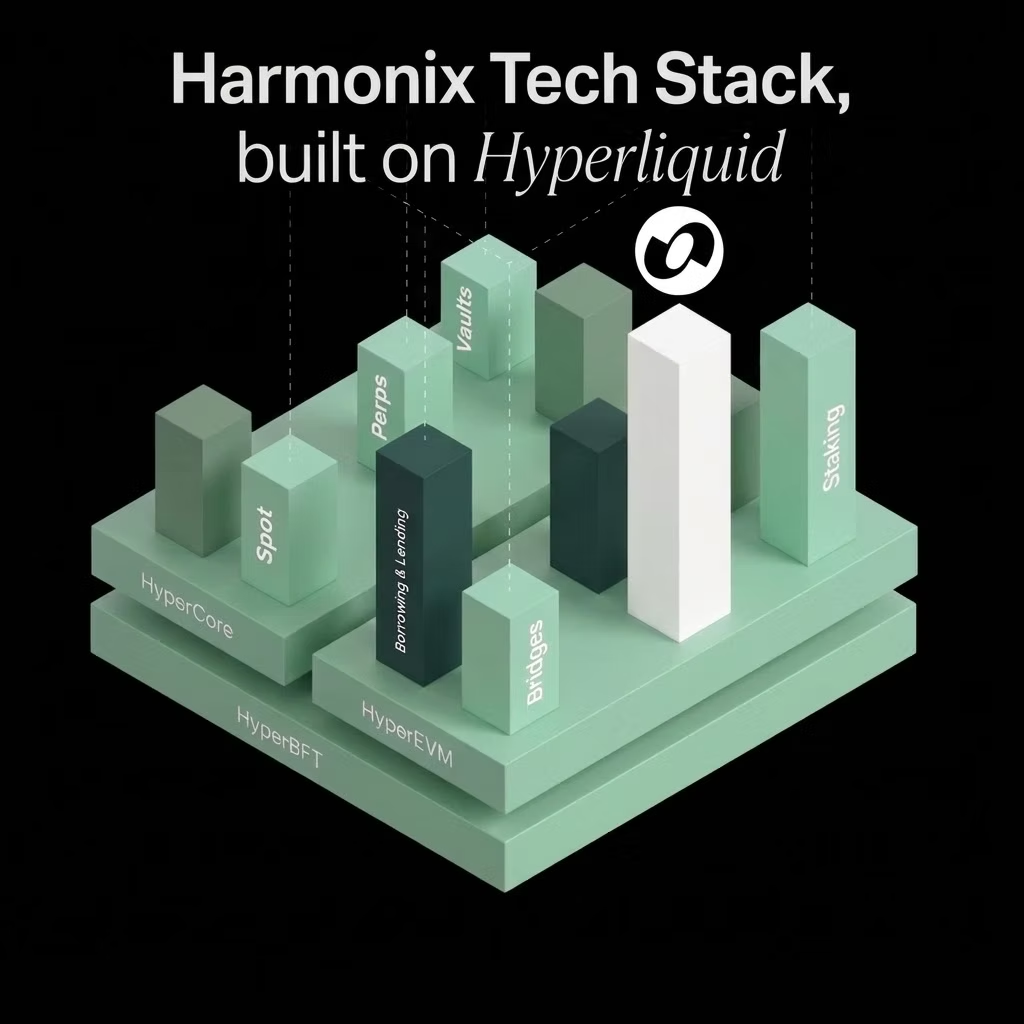
Harmonix is built on Hyperliquid's L1, using HyperBFT for consensus, HyperEVM for execution, and connected to HyperCore for native protocol access. Users who deposit earn native yield (Perps funding rates, Lending, Borrowing, Staking, etc.) as well as tokens from the HyperEVM ecosystem as a reward for early contributions to the protocol.
- HyperBFT: Is the consensus layer where transactions are validated, keeping HyperCore and HyperEVM fast and synchronised.
- HyperCore: Is the execution layer where the Hyperliquid protocol is built, so Perps, Staking, spot and HLP are here.
- HyperEVM: Is the execution layer where Harmonix is built, also housing additional protocols like Felix, Hyperswap, Kinetiq and more.
How Yield is Generated
At the core of Harmonix is a basis-trade engine that pairs spot holdings with perpetual futures on HyperCore to neutralize price direction and earn funding payments. Funding income is layered with ecosystem yield from lending, staking, and looping across HyperEVM protocols — Felix, Hyperswap, Kinetiq, and others — allowing one position to generate yield from multiple independent sources simultaneously.
By centering yield on real funding markets and market-neutral execution, Harmonix aligns user returns with actual on-chain economics. The same capital supports multiple strategies, yield adapts to conditions automatically, and protocol growth flows directly to users.
Protocol Versions
Harmonix has evolved across two major protocol versions:
| Version | Products | Description |
|---|---|---|
| V1 | Basis Trade Vault | The original Harmonix product — a USDC-denominated delta-neutral vault running a HYPE basis trade strategy on Hyperliquid. Captures funding rates by going long spot and short perp with zero directional exposure. |
| V2 | haUSDC haHYPE hakHYPE | The current generation — ERC-4626 yield-bearing tokens that expand beyond a single basis trade into multi-strategy vaults. Capital is deployed across funding markets, lending, staking, and Pendle PT positions simultaneously, with yield compounding directly into the share price. |
V1 proved the core basis trade thesis on Hyperliquid. V2 generalizes that engine across multiple underlying assets and yield sources, giving users a broader suite of yield-bearing tokens that work as composable building blocks across DeFi.
Infrastructure Layer
Harmonix's yield strategies depend on multiple layers of the Hyperliquid ecosystem. Understanding how these components connect explains where yield originates and how it flows through to vault depositors.
Hyperliquid Overview
Hyperliquid is the core environment behind the platform, combining a high-performance perp trading venue with an expanding onchain ecosystem that supports strategy execution, product distribution, and capital formation.
HyperEVM
HyperEVM is the smart contract execution layer where vault logic, DeFi integrations, and yield-bearing product structures are built, making it the main base for product expansion beyond trading alone.
Hyperliquid DEX
The Hyperliquid DEX is the main perp venue used to source funding, basis, and other market-driven opportunities that power delta-neutral and trading-based strategies.
HIP-3 DEXs
HIP-3 markets extend the perp surface area by bringing in new assets and narratives, creating more room for funding-driven strategies, vault design, and future product growth.
DeFi Layer on HyperEVM
The DeFi layer adds lending, LP, looping, and fixed-yield integrations on top of the trading layer, helping capital move beyond pure perp strategies into broader yield opportunities.
Hyperliquid · HyperCore · HyperEVM · perpetual DEX · HIP-3 · DeFi · lending · LP · looping · Pendle · money markets
Build on Harmonix
haUSDC is built on a multi-contract architecture on HyperEVM (AssetVault · VaultManager · AssetManager). ERC-4626 + ERC-7540 + ERC-7575. Read positions, deposit USDC or USDe, and queue redemptions with a single contract interface.
Quick Links
What Harmonix Offers
A full suite of yield-bearing products built natively on Hyperliquid.
Yield-Bearing Stablecoins
haUSDC is a yield-bearing stablecoin on Hyperliquid that captures funding rates from HyperCore. ERC-4626 base, ERC-7540 async withdrawals, ERC-7575 multi-asset deposits. Targeting 7–10% APY at launch.
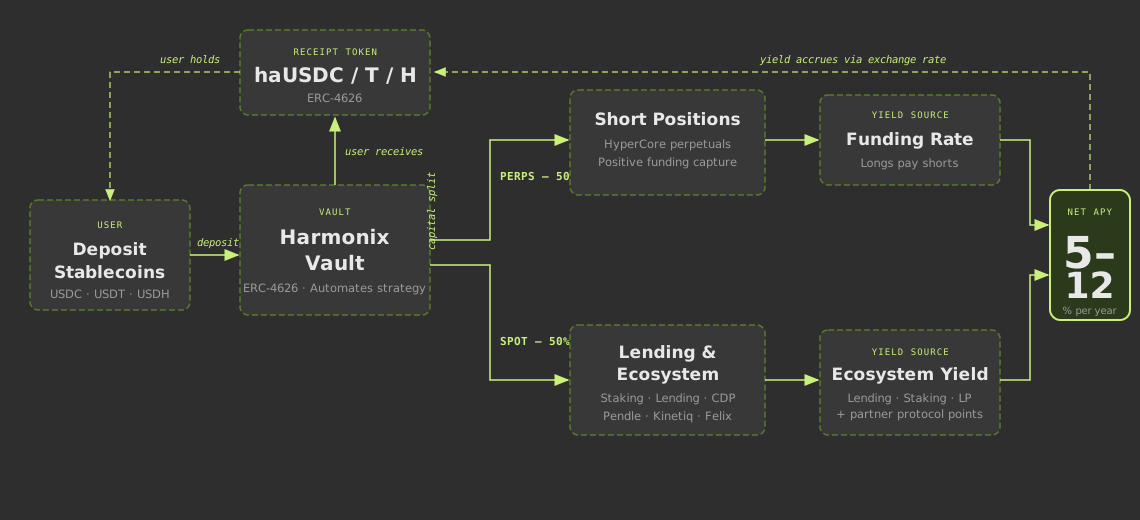
The user-facing flow is short. One token. Hold it. The price grows. Deposit USDC or USDe, receive haUSDC, and yield from delta-neutral funding plus underlying spot yield auto-compounds into the share price. No manual rebalancing, no claiming.
What haUSDC is and how it fits
Turn idle stablecoins into productive capital. Rather than holding stablecoins at zero yield, users deposit USDC or USDe and receive haUSDC, immediately beginning to earn from HyperCore funding markets and HyperEVM ecosystem yield.
Multi-asset, unified PPS. ERC-7575 lets USDC and USDe both deposit into the same vault. Both assets settle into one haUSDC share token, priced on a unified PPS through a USDe/USDC rate oracle. USDe holders earn from HIP-3 markets — a higher-yield alternative to sUSDe with points exposure stacked on top.
Dollar-denominated, yield-accruing. Capital is deployed into delta-neutral strategies that net out directional exposure. The vault targets stability of the underlying denomination; the share price grows over time as yield accrues into the exchange rate.
Accrue ecosystem incentives. Beyond base yield, haUSDC positions accrue Harmonix Points and partner points across the five HIP-3 markets automatically.
haUSDC
haUSDC is a yield-bearing receipt token for stablecoin depositors. Deposit USDC or USDe, receive haUSDC shares. As the vault generates yield, each haUSDC becomes redeemable for more of the underlying over time — yield compounds into the exchange rate, not distributed as separate payments.
Standards: ERC-4626 · ERC-7540 · ERC-7575
Vault Allocation
Capital is deployed across delta-neutral legs on five Hyperliquid markets, with an idle buffer for smooth redemptions:
Delta-neutral engine. The vault holds yield-bearing spot tokens long across HIP-3 markets — Felix, TradeXYZ, Hyena, Markets.xyz — and shorts the corresponding perps on HyperCore via CoreWriter. The two legs are equal size, so directional exposure cancels out. What is left is the funding stream plus the underlying spot yield.
Supply Spot. Lending and liquidity provision across HyperEVM (Felix, HyperSwap, HyperLend) layer additional yield. Allocations rotate dynamically as funding regimes change.
Portfolio Margin via CoreWriter (beta). 20–30% allocation, ~2% additional net safe yield, S3 incentive exposure. Additive to the base — not a replacement.
Idle buffer. A small reserve maintained at all times to support smooth redemptions without unwinding active positions.
Where Yield Comes From
HyperCore funding rates. When more traders bet that crypto goes up than down on Hyperliquid, the crowded side pays a fee — the funding rate — to the less crowded side. haUSDC sits on the other side and collects, around the clock, regardless of direction. Hyperliquid is the most liquid decentralized perp venue in DeFi; HIP-3 open interest has been hitting new all-time highs almost weekly.
Underlying spot yield. Long HIP-3 spot legs across Felix, TradeXYZ, Hyena, and Markets.xyz earn yield on the spot side. Felix Spot Equities, live since February 2026, unlock funding-rate yield, HIP-3 market exposure, and partner points in one position.
Spot supply yield. Lending and liquidity provision across HyperEVM (Felix, HyperSwap, HyperLend) layer additional variable yield on top of funding income.
Idle reserves. A buffer of undeployed capital is maintained at all times to support smooth redemptions without disrupting active strategy positions.
Fees
| Fee Type | Amount |
|---|---|
| Entry | 0% |
| Withdrawal | 0% |
| Performance | 0% |
| Management | 1% annualized |
V2 vaults charge a 1% annualized management fee only. No performance fee. Fee is accrued pro-rata into the share price.
Withdrawals
haUSDC withdrawals run through three async phases per ERC-7540: request, fulfill, claim. The asset amount is locked at request-time, with no re-pricing later. An idle buffer is maintained to absorb routine withdrawals without unwinding.
Request
Call requestRedeem(shares, receiver, owner) on the AssetVault — locks shares at the current PPS and returns a requestId.
Fulfillment
An operator unwinds the corresponding portion of active positions and fulfills the request from the vault. Requests within the idle buffer are typically processed within one day; larger requests may take up to three days.
Claim
Once fulfilled, call claimRedeem(requestId) to receive USDC.
Risks
Funding rate risk. The delta-neutral strategy depends on positive perpetual funding rates. If rates turn negative, the short leg generates a cost rather than income. The vault monitors rates in real time and adjusts position sizing accordingly.
Smart contract risk. Capital interacts with the AssetVault, VaultManager, and AssetManager contracts on HyperEVM. All contracts have been audited by Verichains, Shieldify, and Zenith, with continuous on-chain monitoring by Hypernative — but smart contract risk can never be fully eliminated.
Venue risk. Capital is deployed across HyperCore and multiple HyperEVM protocols. Each venue carries its own smart contract and liquidity risk. Diversification reduces but does not eliminate this exposure.
Yield-Bearing Tokens
haHYPE and hakHYPE are ERC-4626 yield-bearing tokens that put HYPE and kHYPE to work across HyperEVM. Yield accrues automatically into the share price — no claiming, no staking step, no manual rebalancing required.
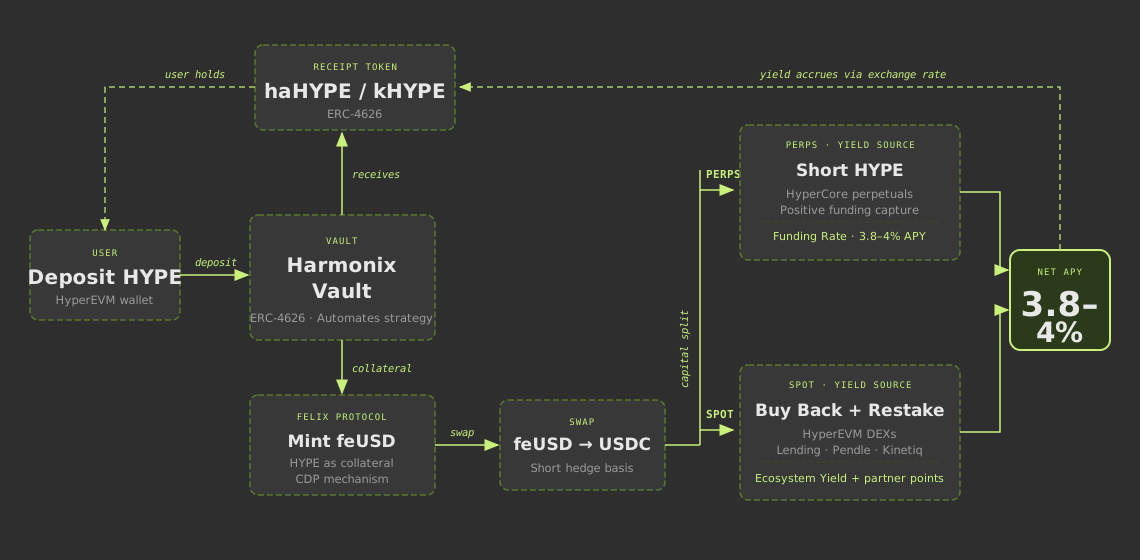
Why Hold haHYPE or hakHYPE
Earn yield on HYPE without selling it. Capital is deployed across delta-neutral strategies, lending markets, and Pendle principal token positions, generating yield from multiple independent sources while you hold.
Automatic compounding. Yield accrues directly into the share price via the ERC-4626 exchange rate. No action required on your part.
Points on top. Every position automatically accrues Harmonix Points and partner protocol points without any additional steps.
Ecosystem-native. Built directly on HyperEVM with capital deployed exclusively across Hyperliquid-native protocols — no bridges, no external dependencies.
How It Works
When you deposit HYPE, Harmonix uses it as collateral to mint feUSD via Felix Protocol. The feUSD is swapped to USDC, which becomes the basis for the hedge. From there the capital splits: 50% is used to short HYPE on HyperCore, earning funding rates from positive carry; the other 50% buys back HYPE and restakes it across HyperEVM protocols — DEXs, money markets, Pendle, and Kinetiq — generating ecosystem yield and points.
The two legs offset each other's directional exposure. Both sides generate yield simultaneously, with net delta close to zero.
For hakHYPE, the mechanic is simpler: kHYPE is already yield-bearing as Kinetiq's liquid staked HYPE. Harmonix layers additional yield on top by deploying into Kinetiq Earn, Pendle principal token markets, and cross-protocol lending strategies.
Where Yield Comes From
For haHYPE, the primary source is funding rate income from shorting HYPE perps on HyperCore when rates are positive. Secondary sources include lending yield from HyperLend, HypurrFi, and Felix, fixed yield from Pendle PT positions, and liquid staking yield via Kinetiq.
For hakHYPE, the base layer is Kinetiq's native staking yield on kHYPE. Pendle PT positions add fixed yield on top, and the HyperLend and Etherfi lending strategies generate additional variable income.
Net yield is realized after borrow costs, fees, and the idle buffer. It compounds directly into the share price and is reflected in real time in the app.
haHYPE
| Property | Value |
|---|---|
| Underlying | HYPE |
| Minimum Deposit | 0.5 HYPE |
| Standard | ERC-4626 |
| Withdrawals | WHYPE |
| Points Accrued | Harmonix, HyperLend, Felix, HypurrFi, kPoints, Ventuals |
Capital Allocation & Vault Architecture
| Strategy | Protocol |
|---|---|
| Delta Neutral on HYPE (2x leverage) | Hyperliquid |
| PT-vkHYPE | Pendle |
| Supply HYPE | HyperLend |
| Supply wstHYPE | HyperLend, HypurrFi, Felix |
| Kinetiq Earn | Kinetiq |
| Idle (buffer) | — |
hakHYPE
| Property | Value |
|---|---|
| Underlying | kHYPE (Kinetiq liquid staked HYPE) |
| Minimum Deposit | 0.5 kHYPE |
| Standard | ERC-4626 |
| Withdrawals | kHYPE |
| Points Accrued | Harmonix, HyperLend, HypurrFi |
Capital Allocation & Vault Architecture
| Strategy | Protocol |
|---|---|
| Kinetiq Earn | Kinetiq |
| PT-vkHYPE, PT-kHYPE | Pendle |
| Supply kHYPE, Borrow & Supply uETH | HyperLend, Etherfi |
| Idle (buffer) | — |
Fees
| Fee Type | Amount |
|---|---|
| Entry | 0% |
| Withdrawal | 0% |
| Performance | 0% |
| Management | 1% annualized |
V2 vaults charge a 1% annualized management fee only. No performance fee. Staying in the vault for at least 7 days ensures yield earned offsets the applicable fee.
Withdrawals
Withdrawals are currently settled in WHYPE. A 5% buffer pool is maintained at all times to support near-instant withdrawals. Requests within the buffer are typically processed within one day. Large withdrawals exceeding 5% of vault TVL may take up to three days to process. Native HYPE withdrawal support is planned for a future update.
Risks
Directional risk. haHYPE and hakHYPE carry directional exposure to HYPE. While the delta-neutral allocation reduces net market beta, these are not fully market-neutral products — holders participate in HYPE price movements on the non-hedged portion.
Funding rate risk. If HYPE perpetual funding rates turn negative, the short leg generates a cost rather than income. The strategy monitors rates in real time and adjusts position sizing or exits the leg if conditions deteriorate.
Pendle PT maturity. Fixed-yield positions on Pendle have defined maturity dates. Positions are sized conservatively and rolled ahead of maturity.
Venue risk. Capital is deployed across multiple HyperEVM protocols. Each carries its own smart contract and liquidity risk. Diversification reduces but does not eliminate this exposure.
FAQs
Does yield pay out automatically?
Yes. Yield accrues continuously into the share price via the ERC-4626 exchange rate. No claiming step or staking action required — holding haHYPE or hakHYPE is sufficient.
Why are withdrawals in WHYPE and not HYPE?
WHYPE is the HyperEVM-native wrapped form of HYPE. Native HYPE withdrawal support is planned for a future update.
Is there a minimum holding period?
No hard lockup. However, staying in the vault for at least 7 days ensures yield earned offsets the applicable management fee.
HAR
The native token of the Harmonix Protocol. Total supply: 1,000,000,000 HAR. No inflation.
The HAR Token
HAR is the native token of the Harmonix Protocol, serving as the core mechanism for governance, economic growth, and user ownership. It is designed to drive governance decisions, treasury direction, and utility-driven participation across the ecosystem.
HAR holders can propose and vote on protocol parameters, treasury allocations, emissions schedules, and Harmonix's HYPE treasury. The total supply is fixed at 1,000,000,000 HAR.
Supply & Allocation
HAR's supply is distributed across Community, Investors, Core Contributors, and the Foundation, with a structured vesting and unlock schedule to ensure long-term alignment and sustainable protocol growth. This design aligns contributors, early supporters, and participants with the protocol's trajectory, reinforcing both governance engagement and economic coordination.
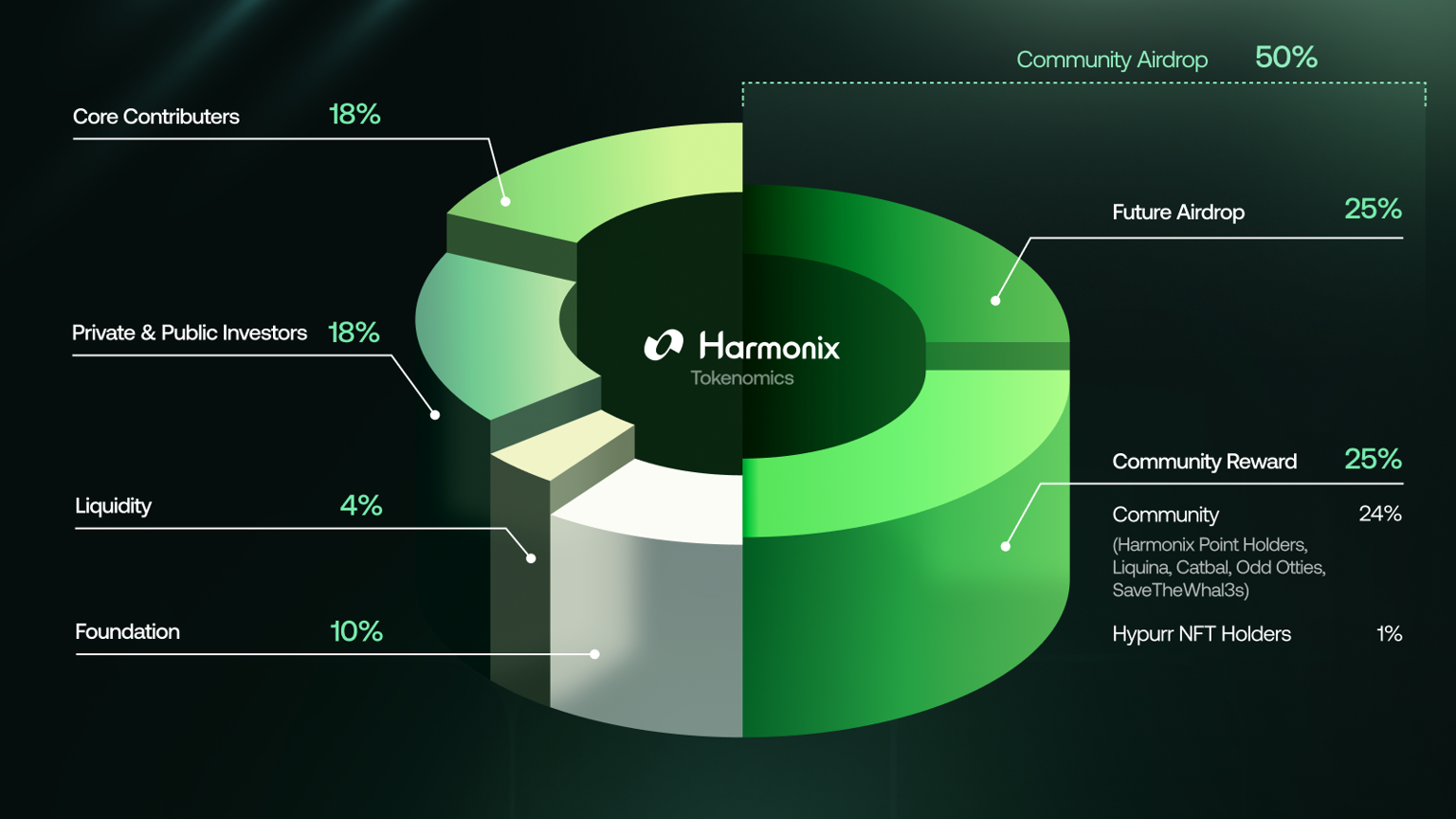
HAR token supply allocation across all categories
Community — 50%
Allocated to participants who have engaged with Harmonix products, contributed to the ecosystem, or will take part in future protocol initiatives.
Airdrop (TGE) — 25%
Distributed at TGE to early participants across multiple Harmonix programs: 5% staking rewards across the Harmonix Staking Vaults and the Downside Protection Vault; 19% Harmonix point holders and partner communities; 1% Hypurr NFT holders. 6.43% remains unclaimed from users who did not sign Terms of Use — reserved for the Downside Protection Vault and future protection rewards.
Future Airdrop — 25%
Reserved for long-term participants, ecosystem contributors, and incentives tied to upcoming Harmonix products. Subject to governance approval, this pool may also fund contributor compensation post-TGE.
Core Contributors — 18%
Allocated to contributors across development, research, operations, and security. Core Team tokens are subject to a 12-month lockup, followed by linear vesting over 36 months, ensuring long-term alignment and sustained participation in the protocol's evolution.
Private & Public Sale — 18%
Allocated to early investors and the public, following a structured unlock schedule. The private sale (15%) is divided into Pre-Seed with 2% unlocking at TGE, and Seed with 5% at TGE. The public sale (3%) is fully unlocked at TGE, directed to the Sonar and Solanium token raises.
Foundation — 10%
Reserved to support ecosystem operations, including liquidity provisioning, exchange listings, LP incentives, strategic partnerships, marketing, and ongoing protocol development. Tokens are deployed progressively based on operational needs and governance.
Liquidity — 4%
Allocated to market-making, initial exchange liquidity, and ensuring stable trading environments for HAR. 2.5% unlocked at TGE, with the remainder locked to support long-term market stability.
Vesting & Unlocks
The HAR token follows a structured, multi-year unlock schedule designed to ensure long-term alignment, sustainable growth, and a healthy market environment. Unlocks are distributed quarterly over 48 months, beginning at TGE, with different categories tailored to the role they play in the ecosystem. Vesting schedules are designed to prevent short-term liquidity shocks and provide predictable token availability over time.
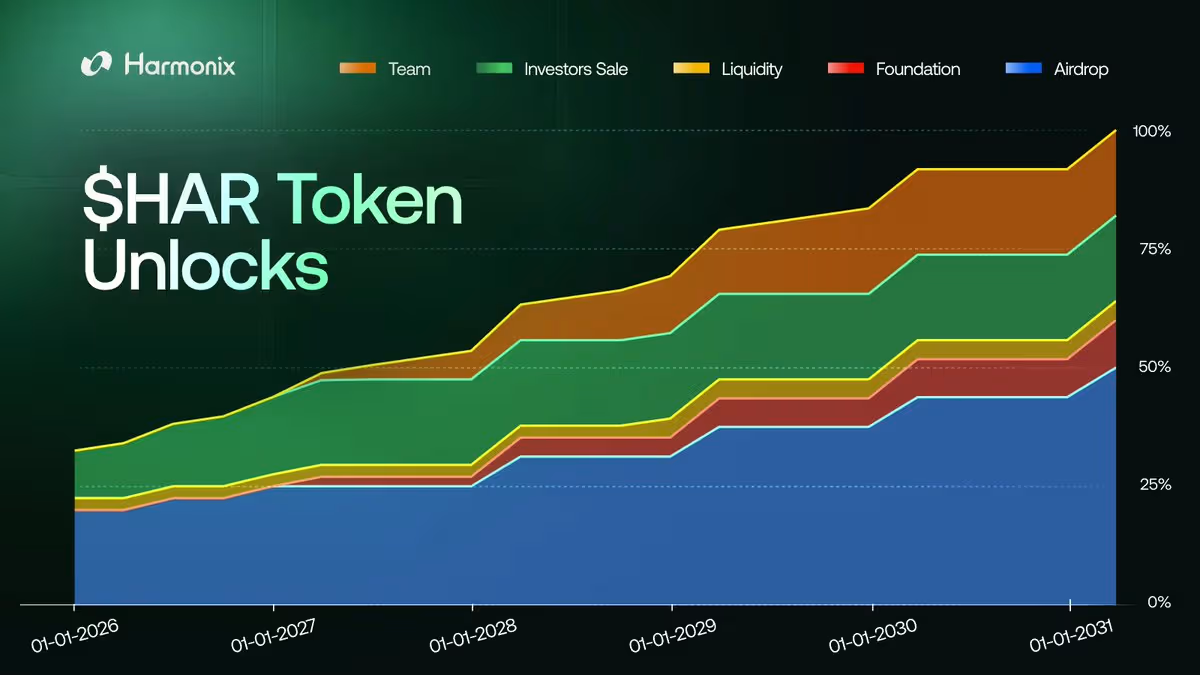
HAR token unlock schedule — Team, Investors, Liquidity, Foundation, Airdrop (2026–2031)
Utility & Governance
Governance & Treasury Direction
Holding HAR grants a voice in shaping Harmonix and the upcoming HYPE treasury — guiding incentives, risk, and long-term strategy. Governance becomes a way to steer how protocol capital evolves.
Downside-Protected Staking
Stake HAR to access the Protection Vault, giving holders yield with built-in downside buffers and priority rewards. It creates a safer, asymmetric way to stay long the ecosystem.
Liquidity Provision
Provide liquidity in pools like HAR/HYPE to earn fees and incentives while strengthening market depth. LPs help anchor the token's stability and capture the upside of ecosystem activity.
FAQs
How do I get HAR?
Through the public sale or via community airdrop allocations. HAR will also be tradeable on open markets post-TGE.
How does governance work?
HAR holders propose and vote on protocol parameters, treasury allocations, and emissions schedules. Details on governance mechanics will be published separately.
Vault Architecture
haUSDC is built on three contract layers: a user-facing layer, an asset-custody layer, and a deployment layer. ERC-4626 base, ERC-7540 async withdrawals, ERC-7575 multi-asset deposits.
Vault Layers
The contracts split into three layers: a user-facing layer, an asset-custody and accounting layer, and a deployment layer. Each layer has a single responsibility, and no single component holds both custody and execution authority. An off-chain NAV oracle (FundNavFeed) sits alongside the on-chain stack and is consumed by VaultManager.
AssetVault — User-Facing Layer
Issues the haUSDC share token and exposes the deposit and redeem flows. Implements the ERC-4626 base for tokenized vault shares, ERC-7540 for asynchronous withdrawals, and ERC-7575 for multi-asset deposits — USDC and USDe both settle into one haUSDC share token, priced on a unified PPS through a USDe/USDC rate oracle.
VaultManager — Custody & Accounting
Holds idle assets, enforces strategy whitelists and per-strategy caps, and is the only contract a curator can allocate from. Reads FundNavFeed to compute price-per-share, and enforces the PPS deviation cap (50–200 bps) and NAV staleness gate. ShareToken (a separate ERC-20) is what mints user shares.
AssetManager — Deployment Layer
Pulls capital from the custody layer and deploys it into the delta-neutral engine: long HIP-3 spot legs across Felix, TradeXYZ, Hyena, and Markets.xyz, with corresponding short perps on HyperCore. Routing between HyperEVM and HyperCore is automated by CoreWriter, which keeps the legs balanced without manual ops.
FundNavFeed — Off-Chain NAV Oracle
An off-chain feed updated by an operator with the latest strategy values. Read by VaultManager to compute PPS. The deviation cap and staleness gate enforced on-chain in VaultManager close the class of NAV-oracle exploits that have hit other vaults.
The Hyperliquid Stack
| Layer | Component | Role in Harmonix |
|---|---|---|
| Consensus | HyperBFT | Sub-second finality. All vault operations and funding events settle in a single block. |
| Execution | HyperCore | Primary yield source. Perpetuals for funding income, spot for long-side hedge, staking for HYPE yield. |
| Smart Contracts | HyperEVM | All Harmonix vault contracts deployed here. haUSDC uses the AssetVault architecture (ERC-4626 / 7540 / 7575). haHYPE and hakHYPE use the BoringVault framework (ERC-4626). |
| HIP-3 Markets | Hyperliquid · TradeXYZ · Hyena · Felix · Markets.xyz | Five markets used for the long spot leg. Felix Spot Equities live since Feb 2026. Hyperliquid itself is the perp venue for the short leg. |
V1 → V2 Upgrades
| Module | V1 | V2 |
|---|---|---|
| Admin custody | EOA signers | Safe multisig (3-of-5). Timelock on upgrades and sensitive params. |
| NAV Oracle | Manual spreadsheet, EOA push | Automated pipeline — multi-source ingestion, validation, versioning. |
| Withdrawals | Synchronous ERC-4626 | On-chain async queue — requestRedeem → fulfillRedeems → claimRedeem. |
| Manager permissions | ForDeFi custody | Merkle root — verifiable off-chain, compact on-chain. Whitelisted targets + selectors. |
| Deposits | Single-asset, single-chain | Multi-asset swap-in path. Multi-chain via bridge. |
Standards
haUSDC ships with three vault standards live at launch on the HIP-3 vault. Other vault types retain the existing ERC-4626 interface.
| Standard | Status | Purpose |
|---|---|---|
| ERC-4626 | Live | Tokenized vault shares — deposit, redeem, price-per-share accounting. Yield compounds into the share price. Fully composable across DeFi. |
| ERC-7540 | Live | Asynchronous withdrawals — request, fulfill, claim. Sync deposits, async redemptions. Fits delta-neutral strategies that take time to unwind cleanly. |
| ERC-7575 | Live | Multi-asset deposits — USDC and USDe both deposit into the same vault, priced on a unified PPS through a USDe/USDC rate oracle, and settle into one haUSDC share token. |
Integrations
| Integration | Status | Description |
|---|---|---|
| CoreWriter | Live · Beta for PM | Bridge between HyperEVM and HyperCore. Routes capital across spot venues and perp shorts without manual ops. Wired for the delta-neutral engine; in beta for Portfolio Margin. |
| Portfolio Margin via CoreWriter | Beta | Runs at 20–30% allocation. Adds roughly 2% net safe yield on top of the base, plus exposure to one of the Hyperliquid Season 3 incentive conditions. Additive — the funding-rate engine remains the primary yield source. |
| Looping on HypurrFi | Ready | Curated by Clearstar Labs. Supply haUSDC as collateral, borrow USDC, redeposit, repeat. Risk-managed leverage within Clearstar's framework. |
| Superform | In progress | Cross-chain vault deposits via ERC-7540. Enables users on other chains to deposit into Harmonix vaults without bridging manually. |
| Pendle PT and LP | Under evaluation | Term-structured exposure is a natural fit. Integration not yet confirmed. |
Strategy Execution Flow
When users deposit into haUSDC, capital follows a structured path from deposit to active strategy deployment. The AssetVault accepts deposits and mints shares; the VaultManager holds idle assets and enforces strategy whitelists and per-strategy caps; the AssetManager pulls capital and deploys it into the delta-neutral engine. CoreWriter automates routing between HyperEVM and HyperCore so the long HIP-3 spot legs and short HyperCore perps stay balanced without manual ops.
deposit flow · allocation · rebalance · CoreWriter · delta-neutral
Withdraw and Settlement Operations
Withdrawal operations span both on-chain and off-chain processes. When a user requests redemption, shares are locked at the current PPS — the asset amount is fixed at request-time and does not re-price later. An operator unwinds the necessary positions on HyperCore and HyperEVM and fulfills the request. The idle buffer absorbs most routine withdrawals without unwinding, but large redemptions require position settlement — which is why fulfillment takes 24–72 hours.
withdraw ops · pending withdrawal · backend · signer · tx batching
Monitoring and Dashboards
The team monitors vault health through real-time dashboards that track TVL, APY, price-per-share movements, position utilization, and exposure across HyperCore and HyperEVM. Alerts fire on NAV deviations, unusual redemption volume, funding rate compression, and contract interaction anomalies.
For end-to-end user verification, proof of funds is surfaced via DeBank: every depositor can independently verify their position, full deposit and withdrawal activity, and realized APY across 7-, 15-, 30-, and 45-day windows — without trusting Harmonix dashboards.
TVL dashboard · monitoring · alerts · NAV · utilization · DeBank · proof of funds
Security and Controls
Vault opsec is built around a four-point security model — secure share minting via delayed execution, a PPS deviation cap, a NAV staleness gate, and an instant anomaly freeze. Privileged actions are gated by a Safe multisig sized to its blast radius, then run through a timelock for sensitive changes. Pause and disable are instant; unpause and re-enable wait through the timelock. See Risks & Audits → Vault Security Model ↗ for the full breakdown.
safe wallet · multisig · timelock · PPS cap · NAV staleness · anomaly freeze · sentinel
Known Constraints
Harmonix is transparent about current operational constraints and active areas of improvement. These include infrastructure dependencies on Hyperliquid's RPC availability, manual components in the NAV oracle pipeline that are being automated, withdrawal fulfillment times that depend on position unwinding complexity, and HyperEVM-specific limitations around native HYPE transfers (requiring WHYPE as a withdrawal token for haHYPE). The team tracks these as active roadmap items.
limitations · infra risk · human error · RPC risk · roadmap blockers
Smart Contracts
All Harmonix contracts are deployed on HyperEVM. ERC-4626 standard throughout.
Integration Guide
Depositing (ERC-4626)
All Harmonix vaults implement the standard ERC-4626 interface. To deposit:
Approve
Call approve(vaultAddress, amount) on the underlying asset token.
Deposit
Call deposit(assets, receiver) on the vault contract.
Receive shares
Receive ha-token shares proportional to current PPS. These compound yield into the exchange rate over time.
Withdrawing
In V2, withdrawals go through an on-chain queue:
Request
Call requestWithdraw(shares) — creates a pending withdrawal request.
Wait
Wait for processing (see withdrawal timing table in Deposits & Withdrawals).
Claim
Call claimWithdraw(requestId) to receive underlying assets.
Reading NAV / Price Per Share
Call pricePerShare() or convertToAssets(1e18) on any vault contract to get the current NAV-based exchange rate. This is updated by the automated NAV Oracle pipeline.
Deployed Contracts
0xF12F8753C25F8005311a24bbbA1f7209249B00e30xaf88d065e77c8cc2239327c5edb3a432268e58310x1368ee9d1212ae5b26ff166049220051a9eebc420xfde5b0626fc80e36885e2fa9cd5ad9d7768d725c0x391121d817da42ed3434d281aedbbcc416a2af18Yield-Bearing Stablecoins — haUSDC
haUSDC is deployed on HyperEVM across three primary contracts: an AssetVault (ERC-4626 / 7540 / 7575 — issues haUSDC and exposes deposit/redeem flows), a VaultManager (custody and accounting — reads the off-chain NAV feed, enforces the PPS deviation cap and staleness gate), and an AssetManager (deployment — routes long HIP-3 spot legs and short HyperCore perps via CoreWriter). Addresses below are the primary contracts currently under development for the HIP-3 vault.
0x31AaA50a6096547b300A5f5af6ECc00D2F3d77e10xd1C8dc811D6254E6565b2A6024D57Cc08123EbCB0x28257cd6b21519A281A90637462bf7956C7d3808Full Contract Registry
haUSDC ships with a multi-contract architecture (AssetVault / VaultManager / AssetManager) on HyperEVM. haHYPE and hakHYPE use the BoringVault framework. All vaults are upgradeable via a Safe multisig with a timelock. Shares are standard ERC-20 tokens (the ha-tokens) that can be transferred, wrapped, or used as collateral in any protocol that supports ERC-4626.
| Contract | Standard | Network | Address |
|---|---|---|---|
| haUSDC AssetVault | ERC-4626 / 7540 / 7575 | HyperEVM | 0x31AaA50a…2F3d77e1 |
| haUSDC VaultManager | Custom | HyperEVM | 0xd1C8dc81…123EbCB |
| haUSDC AssetManager | Custom | HyperEVM | 0x28257cd6…7d3808 |
| haHYPE Vault | ERC-4626 (BoringVault) | HyperEVM | 0xfde5b062…8d725c |
| hakHYPE Vault | ERC-4626 (BoringVault) | HyperEVM | 0x1368ee9d…9eebc42 |
| HAR Token | ERC-20 | HyperEVM | 0x391121d8…af18 |
| FundNavFeed | Off-chain feed | HyperEVM | TBD at launch |
Deposits & Withdrawals
How capital enters and exits Harmonix vaults, including timing, queuing, and fee mechanics.
Harmonix operates three vault types, each with different deposit and withdrawal mechanics.
| Vault Type | Version | Products | Standard |
|---|---|---|---|
| Basis Trade Vault | V1 | HYPE-BASIS | Custom (HypeVault) |
| Yield-Bearing Tokens | V2 | haHYPE, hakHYPE | ERC-4626 (BoringVault) |
| Yield-Bearing Stablecoin | V2 | haUSDC | ERC-4626 / 7540 / 7575 (AssetVault) |
V1 — Basis Trade Vault
The Basis Trade Vault uses a custom HypeVault contract with a two-step withdrawal mechanism designed for the delta-neutral strategy.
Deposit
Approve
Call approve(vaultAddress, amount) on the USDC contract.
Deposit
Call deposit(amount, receiver) on the HypeVault. Shares are minted at the current pricePerShare().
Withdraw (Two-Step)
Initiate
Call initiateWithdrawal(shares). Shares are locked and a withdrawal request is created. Check eligibility with canCompleteWithdraw().
Complete
Once the cooldown period passes, call completeWithdrawal() to receive USDC. Typical fulfillment: 24–72 hours.
V2 — Yield-Bearing Tokens
haHYPE and hakHYPE use the BoringVault framework (ERC-4626). Deposits go through the Teller contract; withdrawals use an async queue.
Deposit
Approve the Teller
Call approve(TELLER_ADDRESS, amount) on the underlying token (HYPE or kHYPE).
Deposit via Teller
Call teller.deposit(asset, amount, minShares, receiver). Shares are minted instantly at the current price-per-share.
Withdraw (Async Queue)
Request
Call requestWithdraw(shares). Shares are locked in escrow and a requestId is returned. Shares stop accruing yield immediately.
Wait
The Manager unwinds positions to free liquidity. Typical fulfillment: 24–72 hours.
Claim
Call claimWithdraw(requestId) to receive the underlying token.
V2 — Yield-Bearing Stablecoins (haUSDC)
haUSDC uses a three-contract architecture: AssetVault handles user-facing deposits and redemptions (ERC-4626 / 7540 / 7575), VaultManager holds custody and computes PPS, and AssetManager deploys capital into the delta-neutral engine. Multi-asset deposits (USDC and USDe) settle into a single haUSDC share token via ERC-7575. Withdrawals run through ERC-7540 async phases.
Deposit (synchronous)
USDC.approve(ASSETVAULT_ADDRESS, amount)
// or USDe.approve(ASSETVAULT_ADDRESS, amount)
assetVault.deposit()assetVault.deposit(asset, amount, receiver) → shares
Withdraw (ERC-7540 async)
requestId is returned. The asset amount you'll receive is fixed at this point.assetVault.requestRedeem(shares, receiver, owner) → requestId
RedeemFulfilled event.assetVault.getRedeemRequest(requestId) → { status, assets }
// status: 0 = Pending 1 = Fulfilled 2 = Claimed
Fulfilled, call claimRedeem(). The vault burns the locked shares and transfers USDC to the receiver.assetVault.claimRedeem(requestId) → assets
Withdrawal Timing
| Vault | Condition | Estimated Time |
|---|---|---|
| Basis Trade (V1) | Two-step: initiate → complete | 24–72 hours |
| V2 Vaults | Request ≤ buffer pool (~5% TVL) | ~1 day |
| V2 Vaults | Normal queue | 1–3 days |
| V2 Vaults | Large withdrawal (> 5% TVL) | Up to 3 days |
What You Receive
| Product | Redeem / Exit Path | Receive |
|---|---|---|
| Basis Trade Vault | Two-step withdrawal | USDC |
| haUSDC | Async queue | Underlying stablecoin |
| haHYPE | Async queue | WHYPE |
| hakHYPE | Async queue | kHYPE |
ERC-7540 & ERC-7575 in haUSDC
ERC-7540 standardizes the asynchronous withdrawal flow at the contract level. Users call requestRedeem to lock shares at the current PPS, an operator fulfills the request, and the user calls claimRedeem to receive assets — the asset amount is fixed at request-time with no re-pricing later. Deposits remain synchronous.
ERC-7575 lets a single vault accept multiple deposit assets without wrapper contracts. USDC and USDe both deposit into haUSDC, are priced on a unified PPS through a USDe/USDC rate oracle, and settle into one haUSDC share token.
Native cross-chain integrations sit on top of these standards — once a Superform-style aggregator integrates, users will be able to deposit into haUSDC from any chain with any asset, via supported aggregator platforms and mobile apps. No manual bridging.
Smart Contract Integration
Integrate Harmonix vaults into your application with ERC-4626 standard functions and custom vault interfaces.
Get Started
Harmonix offers two integration paths depending on your needs:
ERC-4626 Vaults
Standard yield-bearing vaults on HyperEVM
Basis Trade Vault
Multi-asset vault on Arbitrum
Integration Components
Both integration paths require three main components:
ERC-4626 Vaults Integration (V2)
haHYPE and hakHYPE use the BoringVault framework — deposits go through the Teller contract, withdrawals use an async queue. haUSDC uses the AssetVault architecture (ERC-4626 / 7540 / 7575) — deposits go through assetVault.deposit(asset, amount, receiver), withdrawals run through ERC-7540 async phases.
Quick Start — haUSDC (AssetVault, ERC-4626 / 7540 / 7575)
// 1. Approve the AssetVault — works for USDC or USDe (ERC-7575 multi-asset)
await token.approve(ASSETVAULT_ADDRESS, amount);

// 2. Deposit — shares minted instantly at the current PPS
const shares = await assetVault.deposit(asset, amount, receiver);

// 3. Request redemption — shares locked at the current PPS, asset amount fixed
const requestId = await assetVault.requestRedeem(shares, receiver, owner);

// 4. Claim once fulfilled (24–72h) — receives USDC
const assets = await assetVault.claimRedeem(requestId);
Quick Start — haHYPE / hakHYPE (BoringVault)
// 1. Approve the Teller to spend your tokens
await token.approve(TELLER_ADDRESS, amount);

// 2. Deposit via Teller — shares minted instantly
const shares = await teller.deposit(asset, amount, minShares, receiver);

// 3. Request withdrawal — shares locked, requestId returned
const requestId = await teller.requestWithdraw(shares);

// 4. Claim once fulfilled (24–72h)
const assets = await teller.claimWithdraw(requestId);
Contract Addresses
| Vault | Network | Contract Address |
|---|---|---|
| haHYPE | HyperEVM | 0xfde5b0626fc80e36885e2fa9cd5ad9d7768d725c |
| hakHYPE | HyperEVM | 0x1368ee9d1212ae5b26ff166049220051a9eebc42 |
| haUSDC AssetVault | HyperEVM | 0x31AaA50a6096547b300A5f5af6ECc00D2F3d77e1 |
Basis Trade Vault Integration
Multi-asset vault on Arbitrum with automatic token swapping via KyberSwap.
Quick Start
// 1. For USDC deposits (no swap needed)
await vault.deposit(amount, USDC_ADDRESS, '0x');

// 2. For USDT/DAI deposits (with KyberSwap)
const swapData = await fetchKyberSwapCalldata(token, USDC_ADDRESS, amount);
await vault.deposit(amount, tokenAddress, swapData);

// 3. Initiate withdrawal
await vault.initiateWithdrawal(shares);

// 4. Complete withdrawal when ready
const canWithdraw = await vault.canCompleteWithdraw(userAddress);
if (canWithdraw) {
  await vault.completeWithdrawal(shares);
}Get a User Position
Read a user's vault position and pending withdrawals on-chain using the Lens contract or direct calls:
// User's share balance
const shares = await vault.balanceOf(userAddress);

// Current price per share (exchange rate)
const pps = await accountant.getRateInQuoteSafe(vault.address);

// User's position value in underlying asset
const value = shares * pps / 1e18;

// Check pending withdrawal requests
const request = await teller.getRedeemRequest(requestId);
// request.status: 0 = Pending, 1 = Fulfilled, 2 = Claimed
// request.assets: amount claimable when fulfilled
For bulk position queries across multiple users, use the Harmonix REST API instead of individual on-chain calls.
Compute Share Valuation
The vault share price (price-per-share, PPS) is the ratio of total vault assets to total shares outstanding. The Accountant contract maintains this rate:
// Get the current exchange rate (assets per share, scaled to 1e18)
const rate = await accountant.getRateInQuoteSafe(vault.address);

// Convert shares to underlying asset value
const assetsOut = (shares * rate) / 1e18;

// Convert underlying asset amount to shares
const sharesOut = (assets * 1e18) / rate;

// Total vault value
const totalAssets = await vault.totalAssets();
const totalShares = await vault.totalSupply();
The Accountant updates the exchange rate periodically with safety bounds — the rate can only move within a constrained range per update to prevent manipulation. Rate updates include accrued yield and deducted management fees.
APR Computation
Vault APR is derived from the change in price-per-share over time. There are two methods depending on your use case:
Method 1: On-chain (two snapshots)
// Record PPS at two points in time
const pps_t0 = await accountant.getRateInQuoteSafe(vault.address); // at time t0
const pps_t1 = await accountant.getRateInQuoteSafe(vault.address); // at time t1

// Calculate annualized return
const elapsed_days = (t1 - t0) / 86400;
const period_return = (pps_t1 - pps_t0) / pps_t0;
const apr = period_return * (365 / elapsed_days);
const apy = Math.pow(1 + period_return, 365 / elapsed_days) - 1;
Method 2: REST API (recommended)
// Fetch pre-computed APY from the Harmonix API
const res = await fetch('https://api.harmonix.fi/api/v1/vaults/haUSDC');
const vault = await res.json();
const apy = vault.apy;         // 7-day rolling APY
const tvl = vault.tvl;         // total value locked
The API returns a 7-day rolling APY that smooths short-term volatility in funding rates. For historical APY data, use the /api/v1/vaults/{slug}/performance endpoint.
Frontend Integration
If you are building a frontend that displays Harmonix vault data, here is the recommended approach:
| Data | Source | Update Frequency |
|---|---|---|
| Vault APY, TVL, strategy info | REST API (/api/v1/vaults) | Every 5 minutes |
| User balance and position value | On-chain vault.balanceOf() + Accountant PPS | Per block or on user action |
| Pending withdrawal status | On-chain teller.getRedeemRequest() | Poll every 30 seconds during pending |
| Historical performance | REST API (/api/v1/vaults/{slug}/performance) | Daily |
| Points balances | REST API (/api/v1/users/{address}/points) | Every 15 minutes |
teller.deposit() succeeds, update the user's share balance immediately from the transaction receipt rather than waiting for the next API poll. The deposit is synchronous — shares are minted in the same transaction.Next Steps
Explore the detailed reference guides:
Harmonix API
REST API for fetching vault data, APY metrics, TVL, and points. No authentication required.
Base URL
https://api.harmonix.fi
Vaults
/api/v1/vaults/{slug}
Returns full details for a single vault — APY, TVL, contract address, points, strategy, and network info.
Path Parameter
| Parameter | Type | Description |
|---|---|---|
slug | string | Vault identifier. See vault slugs below. |
Vault Slugs
| Vault | Slug |
|---|---|
| haHYPE — HyperEVM HYPE Vault | hyperevm-delta-neutral-hype-v3 |
| hakHYPE — HyperEVM kHYPE Vault | hyperevm-khype-v1 |
| Basis Trade Vault | hype-delta-neutral-v1 |
Example Request
curl -X GET 'https://api.harmonix.fi/api/v1/vaults/hyperevm-khype-v1' \
  -H 'accept: application/json'
Example Response
{
  "id": "b6982c21-76ff-4545-b49c-053b722eecd1",
  "name": "HyperEVM $KHYPE Vault",
  "contract_address": "0x1368Ee9d1212AE5B26Ff166049220051a9EEbc42",
  "slug": "hyperevm-khype-v1",
  "vault_currency": "KHYPE",
  "underlying_asset": "KHYPE",
  "network_chain": "hyperevm",
  "category": "real_yield",
  "strategy_name": "delta_neutral_strategy",
  "apy": 8.048023433150565,
  "apy_7d": 8.048023433150565,
  "apy_15d": 8.048023433150565,
  "apy_30d": 8.048023433150565,
  "apy_45d": 8.048023433150565,
  "base_weekly_apy": 5.828023433150564,
  "base_monthly_apy": 5.828023433150564,
  "reward_weekly_apy": 0.0,
  "reward_monthly_apy": 0.0,
  "tvl": 23986.572980675308,
  "tvl_usd": 1284404.7533064985,
  "price_per_share": 0.0,
  "max_drawdown": 0.0,
  "update_frequency": "daily",
  "tags": ["harmonix", "new", "popular"],
  "points": [
    { "name": "HYPERLEND", "point": 0.0 },
    { "name": "hypurrfi", "point": 0.0 },
    { "name": "kPoints", "point": 0.0 },
    { "name": "Harmonix", "point": 15191.64 }
  ],
  "supported_networks": [
    { "chain": "hyperevm", "vault_slug": "hyperevm-khype-v1" }
  ]
}
Response Fields
| Field | Type | Description |
|---|---|---|
id | string | Unique vault UUID. |
name | string | Human-readable vault name. |
contract_address | string | On-chain contract address. |
slug | string | URL-safe vault identifier used in API calls. |
vault_currency | string | The token the vault is denominated in. |
network_chain | string | Blockchain network (e.g. hyperevm, arbitrum). |
strategy_name | string | Strategy type (e.g. delta_neutral_strategy). |
apy | number | Current APY (%). |
apy_7d | number | 7-day average APY (%). |
apy_15d | number | 15-day average APY (%). |
apy_30d | number | 30-day average APY (%). |
apy_45d | number | 45-day average APY (%). |
base_weekly_apy | number | Base strategy APY, excluding rewards. |
reward_weekly_apy | number | Additional APY from reward programs. |
tvl | number | Total value locked in vault currency. |
tvl_usd | number | Total value locked in USD. |
price_per_share | number | Current price of one vault share. |
max_drawdown | number | Maximum historical drawdown. |
points | array | Protocol point rewards accrued by the vault. |
update_frequency | string | How often vault metrics are updated. |
Developer Toolkit
Libraries, providers, and tools for building on Harmonix vaults. No proprietary SDK required — use the same JavaScript stack you already know.
Recommended Libraries
Harmonix vaults are standard EVM smart contracts on HyperEVM. Interact with them using the same libraries used across Ethereum, Arbitrum, and every other EVM chain:
| Library | Language | Best For |
|---|---|---|
| Viem ↗ | TypeScript / JavaScript | Modern, type-safe contract interactions. Recommended for new projects. Lightweight, tree-shakeable, and designed for the latest EVM patterns. |
| Ethers.js v6 ↗ | TypeScript / JavaScript | The most widely used EVM library. Mature ecosystem, extensive documentation, and broad community support. Great for projects already using Ethers. |
Quick Start — Read Vault Data with Viem
// npm install viem
import { createPublicClient, http, formatUnits } from 'viem'
import { hyperevm } from 'viem/chains'

const client = createPublicClient({
  chain: hyperevm,
  transport: http()
})

// Read price-per-share from a Harmonix vault
const pps = await client.readContract({
  address: 'VAULT_ADDRESS',
  abi: [{ name: 'totalAssets', type: 'function',
          inputs: [], outputs: [{ type: 'uint256' }],
          stateMutability: 'view' }],
  functionName: 'totalAssets'
})

console.log('Total assets:', formatUnits(pps, 6))
See the Smart Contract Integration guide for full deposit/withdraw flows with working code.
Quick Start — Read Vault Data with Ethers.js
// npm install ethers
import { JsonRpcProvider, Contract, formatUnits } from 'ethers'

const provider = new JsonRpcProvider('https://rpc.hyperliquid.xyz/evm')

const vault = new Contract('VAULT_ADDRESS', [
  'function totalAssets() view returns (uint256)',
  'function totalSupply() view returns (uint256)'
], provider)

const [assets, supply] = await Promise.all([
  vault.totalAssets(),
  vault.totalSupply()
])

console.log('PPS:', formatUnits(assets, 6) / formatUnits(supply, 6))
RPC & Data Providers
For production apps that need reliable RPC endpoints, indexing, or enhanced APIs beyond raw node calls:
| Provider | Services | HyperEVM Support |
|---|---|---|
| Hyperliquid RPC | Native public RPC endpoint | Direct — rpc.hyperliquid.xyz/evm |
| Alchemy ↗ | Enhanced RPC, webhooks, NFT/token APIs, transaction simulation | Check availability |
| Moralis ↗ | Web3 data API, token balances, transaction history, real-time streams | Check availability |
What You Need
| Task | Use | Docs |
|---|---|---|
| Read vault APY, TVL, metadata | Harmonix REST API | API Reference → |
| Deposit / withdraw / check balances | Viem or Ethers.js + vault ABIs | Smart Contract Integration → |
| Look up contract addresses | On-chain registry | Smart Contracts → |
| Query user positions in bulk | Lens contract | Lens Functions → |
Harmonix SDK
Harmonix SDK
A dedicated TypeScript SDK with typed vault interactions, position helpers, and built-in multicall support is in development. In the meantime, use Viem or Ethers.js with the guides above.
Proof of Solvency
How Harmonix verifies that vault liabilities are always backed by real on-chain assets.
Harmonix publishes a Merkle tree of all vault positions and corresponding liabilities. Anyone can verify that total assets exceed total share token supply at any given time — no trust required, no waiting for an audit cycle.
| Vault | Coverage | Verification |
|---|---|---|
| haUSDC | 100% on-chain, fully verifiable | Merkle proof + HyperEVM state |
| haHYPE | 100% on-chain, fully verifiable | Merkle proof + HyperEVM state |
| hakHYPE | 100% on-chain, fully verifiable | Merkle proof + HyperEVM state |
| Basis Trade Vault | 100% on-chain, fully verifiable | Merkle proof + Arbitrum state |
Risks & Audits
Harmonix has undergone rigorous security reviews by Verichains, Shieldify, and Zenith, plus real-time on-chain risk monitoring by Hypernative. Security extends beyond Harmonix's own contracts — all integrated external protocols, DEXs, and lending platforms are carefully vetted to minimize third-party risk exposure.
Vault Security Model
Vault opsec is the top priority. Four protections sit at the vault level.
- Secure share minting and accounting. Sensitive operations run through delayed execution. A compromised admin key cannot execute instantly.
- PPS threshold cap. Share prices are capped within a configured deviation range (50–200 bps), with real asset backing enforced via yield-bearing tokens. Closes the class of edge cases that have hit other vaults.
- NAV staleness gate. Transactions revert if total-asset data is too old, preventing stale-oracle exploits.
- Anomaly freeze. The vault can be instantly frozen for deposits and withdrawals when anomalies are detected.
Multisig and Timelock
Every privileged action is gated by a multisig sized to its blast radius, then run through a timelock for sensitive changes.
| Role | Multisig | Scope |
|---|---|---|
| Admin and upgrades | 3 of 5 | Core configuration, fees, risk parameters, contract upgrades |
| Curator | 2 of 3 | Capital allocation between strategies, fee harvesting |
| Operator | 2 of 3 | NAV updates and redemption fulfillment |
| Strategy operator | 2 of 3 | Per-strategy execution, isolated per strategy |
| Sentinel | Cancel-only | Revokes pending timelock operations on suspicion |
Sensitive admin operations sit behind a timelock, so even in a worst-case admin key compromise actions cannot execute instantly. There is always a delay window for users and the sentinel to react. Pause and disable are instant; unpause and re-enable wait through the timelock — an attacker should not be able to immediately undo a defensive pause. Contract upgrades run through Safe multisig plus a timelock controller; the new implementation is deployed bare, scheduled, the delay passes, then anyone can execute. There is no backdoor admin on the timelock.
Audits
Full smart contract security audit covering Harmonix Finance core contracts. Conducted by Verichains, a leading blockchain security firm.
Independent security review of Harmonix's core smart contract architecture, vault logic, and access control systems.
Hyperliquid-focused security review covering Harmonix's HyperEVM integrations, yield strategies, and on-chain risk surface.
Risk Disclosures
| Risk | Products Affected | Mitigation |
|---|---|---|
| Funding rate turns negative | haUSDC, haHYPE, hakHYPE | Real-time monitoring, automatic rotation to lending/staking |
| Directional HYPE exposure | haHYPE, hakHYPE | Delta-neutral sub-strategy reduces but does not eliminate exposure |
| Smart contract vulnerability | All products | Audited by Verichains, Shieldify, Zenith |
| Venue / counterparty risk | All products | Diversified across HyperEVM protocols; no single-venue concentration |
| Pendle PT maturity | haHYPE, hakHYPE | Positions rolled ahead of maturity |
Fees
The 1% management fee accrues continuously and is reflected in the vault share price. There is no separate fee transaction — the fee is built into the price-per-share calculation, so the APY figures displayed in the app and API are always net of fees.
V2 Vaults (haUSDC, haHYPE, hakHYPE)
| Fee Type | Rate | Description |
|---|---|---|
| Entry / Withdrawal Fee | 0% | Deposit and redeem without cost. |
| Management Fee | 1% annualized | Charged on total assets under management. Accrues daily into the vault share price. |
| Performance Fee | None | No performance fee on V2 vaults. |
V1 Basis Trade Vault
| Fee Type | Rate | Description |
|---|---|---|
| Entry / Withdrawal Fee | 0% | Deposit and redeem without cost. |
| Management Fee | 1% annualized | Charged on total assets under management. |
| Performance Fee | 10% | Applied only on net profits at the time of withdrawal. |
BuilderCode
Harmonix implements BuilderCode, a fee-sharing mechanism that collects a small fee based on trading volume on HyperCore from whitelisted vaults. Fees are calibrated to trading volume, ensuring that APY and user yields are not affected.
BuilderCode is already active on Hype–USDC, KelpDAO, and Hype Vaults, and all new vaults are automatically enrolled in the program.
Analytics
Track Harmonix protocol performance, TVL, and vault metrics across multiple analytics platforms.
Points & Rewards
How Harmonix Points accrue and how partner protocol point programs interact with Harmonix activity.
Points accrue automatically into your position — no claiming or staking step required. Holding ha-tokens is sufficient. All programs run in parallel, meaning a single deposit simultaneously accrues Harmonix Points and multiple partner protocol point rewards.
| Product | Harmonix Points | Partner Points |
|---|---|---|
| haUSDC | ✓ | Tradexyz, Hyna |
| haHYPE | ✓ | HyperLend, Felix, HypurrFi, kPoints, Ventuals |
| hakHYPE | ✓ | HyperLend, HypurrFi |
Season 2 Ended at TGE
Season 2 launched on March 4 at 12 PM UTC following the conclusion of Season 1. It introduced a refined points formula, tiered rankings, and new rewards for consistent participation.
How Points Are Earned
Points are earned through vault deposits, staking, and other on-chain activities. They accrue automatically — no manual claiming. A minimum $10 vault deposit is required to earn and retain tier status. Staking only counts toward tier progression if you have an active vault deposit.
Ranking Tiers
Points determine your weekly tier. Tiers refresh every week based on your relative position among all participants.
| Tier | Percentile |
|---|---|
| Bronze | 0% – 24.99% |
| Silver | 25% – 49.99% |
| Gold | 50% – 74.99% |
| Diamond | 75% – 100% |
Connect your wallet in the Harmonix app to view your points, tier, and progress.
FAQ
Common questions about Harmonix products and architecture.
Products
Is haUSDC delta-neutral?
Yes. haUSDC is fully market-neutral — capital is deployed into delta-neutral strategies that eliminate directional price exposure. Yield compounds continuously into the share price.
Are haHYPE and hakHYPE delta-neutral?
No. haHYPE and hakHYPE are not fully delta-neutral products. A sub-strategy within each vault runs a delta-neutral position to reduce net beta, but the overall product carries directional HYPE exposure. If HYPE price changes, your position value changes accordingly on the non-hedged portion.
Does yield pay out automatically?
Yes. Yield accrues into the share price continuously. There is no claim step — holding the ha-token is sufficient. When you redeem, you receive more of the underlying than you deposited.
Why are haHYPE withdrawals in WHYPE and not HYPE?
WHYPE is the HyperEVM-native wrapped form of HYPE. Native HYPE withdrawal support is on the roadmap for a future update.
Architecture
What is HIP-3?
HIP-3 is Hyperliquid's native standard for builder-deployed perpetuals and yield-bearing spot tokens. haUSDC routes exposure across five Hyperliquid markets — Hyperliquid itself as the perp venue for the short leg, plus four HIP-3 spot markets (Felix, TradeXYZ, Hyena, Markets.xyz) for the long legs and points exposure. These tokens trade natively on Hyperliquid, enabling Harmonix to earn their underlying yield without bridges.
What oracle does Harmonix use?
haHYPE and hakHYPE use Pyth Network for NAV pricing and collateral valuation. haUSDC uses an off-chain FundNavFeed updated by an operator with the latest strategy values; VaultManager reads it on-chain and enforces a PPS deviation cap (50–200 bps) and a NAV staleness gate. USDC and USDe are priced into a unified PPS via a USDe/USDC rate oracle.
Is Harmonix audited?
Yes. Contracts have been independently audited by Verichains, Shieldify, and Zenith, with real-time on-chain monitoring by Hypernative. You can read each report directly: Verichains ↗, Zenith ↗, Shieldify ↗.
Basis Trade Vault
A USDC-denominated delta-neutral vault that captures HYPE funding rates on Hyperliquid. Deposit USDC, earn yield from the spread between spot and perpetual markets — with zero directional HYPE exposure.
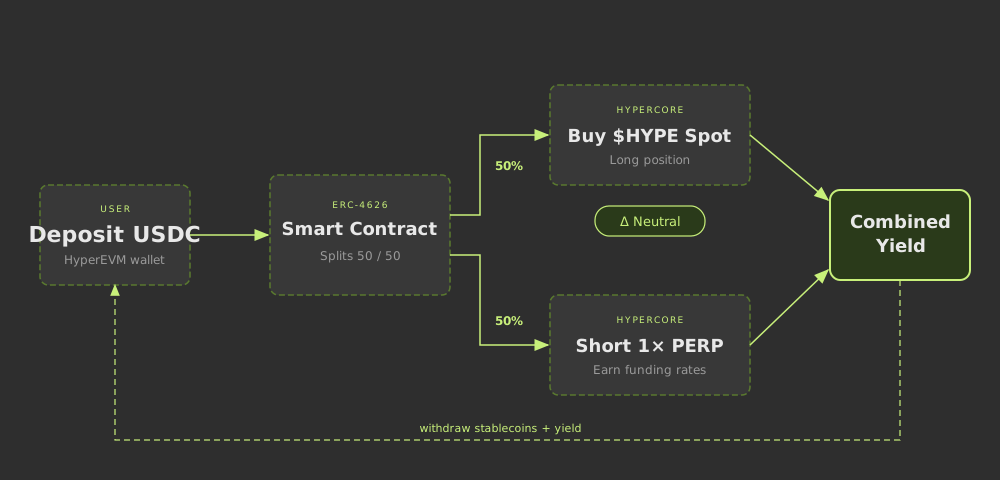
What the Basis Trade Vault Is
Delta-neutral yield on USDC. The vault deploys USDC into a basis trade — buying HYPE on the spot market while simultaneously opening an equal-sized 1× short on HYPE perpetuals. The two legs cancel each other's price exposure, leaving a position that earns funding rate income regardless of whether HYPE goes up or down.
Fully automated. Position sizing, rebalancing, and funding collection are handled by the vault's strategy engine. No manual management required — deposit USDC and let the vault work.
Ecosystem incentives. On top of base yield, depositors earn Harmonix Points automatically.
How It Works
When you deposit USDC, the smart contract splits your capital 50/50:
Deposit
User deposits USDC into the vault and receives shares representing their position.
Spot Leg — 50%
Half of the capital buys $HYPE on the spot market via HyperCore, establishing the long position.
Perpetual Leg — 50%
The other half opens a 1× short HYPE-USD perpetual position on HyperCore, hedging out all price exposure and earning funding rate payments.
Yield Accrual
Both legs generate yield — funding income from the perp short and any appreciation captured from the spot position. Combined yield flows back to depositors through the share price.
Vault Details
| Property | Value |
|---|---|
| Underlying | USDC |
| Strategy | Delta-neutral basis trade (long spot / short perp) |
| Chain | Hyperliquid (HyperCore + HyperEVM) |
| Standard | ERC-4626 |
| Minimum Deposit | $10 USDC |
| Custody | Fordefi |
| Strategist | Harmonix |
| Audit | Shieldify, Verichains, Zenith |
| Risk Monitoring | Hypernative (real-time) |
| Vault Contract | 0xF12F8753C25F8005311a24bbbA1f7209249B00e3 · Arbiscan ↗ |
| Deposit / Withdraw Token | USDC · 0xaf88d065e77c8cC2239327C5EDb3A432268e5831 |
| Vault App | Open Vault ↗ |
Vault Allocation
| Asset | Allocation |
|---|---|
| HYPE Spot (long) | 50% |
| HYPE Perp (1× short) | 50% |
Where Yield Comes From
Funding rate income. When the HYPE perpetual funding rate is positive (longs pay shorts), the vault's short perp position earns funding payments. This is the primary and most consistent yield source.
Basis spread. The price difference between HYPE spot and HYPE perpetuals creates a spread the vault captures over time through periodic rebalancing.
No directional risk. The spot long and perp short offset each other — the vault is market-neutral. Yield comes from structural market inefficiencies, not from betting on HYPE's price direction.
Fees
| Fee Type | Amount |
|---|---|
| Entry | 0% |
| Early Withdrawal | 0% |
| Performance | 10% on net profit |
| Management | 1% annualized |
Withdrawals
Withdrawals are processed through an on-chain queue. Once you initiate a withdrawal, the vault begins unwinding your share of the spot and perp positions. Depending on market conditions, this process may take several minutes to hours.
Initiate
Press "Initiate Withdrawal" on the app — creates a pending withdrawal request.
Processing
The vault unwinds positions and withdraws funds from the trading venue. This waiting period covers the time needed to close spot and perp positions.
Claim
Once funds are back in the vault, claim your USDC from the Withdrawal page.
Risks
Negative funding rates. If HYPE perpetual funding rates turn negative (shorts pay longs), the strategy incurs a cost rather than income. The vault monitors rates in real time and adjusts position sizing or pauses the strategy if conditions deteriorate.
Execution risk. Rebalancing the spot and perp legs involves timing. Rapid price movements during rebalancing may temporarily create small directional exposure, though positions are sized to minimize this window.
Venue risk. Capital is deployed on HyperCore for both spot and perpetual trades. Exchange downtime, liquidity gaps, or smart contract issues on HyperCore could impact the vault's ability to manage positions.
Track Performance
Monitor live vault performance, APY history, and TVL on the Harmonix Vault Dashboard ↗.
Smart Contract Reference
The HypeVault contract handles deposits, withdrawals, and share accounting. It uses a two-step withdrawal mechanism with price-per-share accounting.
Write Functions
function deposit(uint256 amount, address tokenIn, bytes swapCallData) external
Deposits amount of tokenIn into the vault. Accepts USDC, USDT, or DAI. For USDC deposits pass 0x as swapCallData; for other tokens provide KyberSwap swap calldata.
function initiateWithdrawal(uint256 shares) external
Begins the withdrawal process by locking shares. Assets can be claimed later via completeWithdrawal().
function completeWithdrawal(uint256 shares) external
Finalizes a previously initiated withdrawal. Burns shares and transfers the corresponding USDC to the caller.
View Functions
function balanceOf(address owner) external view returns (uint256)
Returns the number of vault shares owned by owner.
function getUserWithdrawlShares(address owner) external view returns (uint256)
Returns the number of shares owner has queued for withdrawal.
function pricePerShare() external view returns (uint256)
Returns the current value of one share in the underlying asset (USDC).
function totalValueLocked() external view returns (uint256)
Reports the total value of all underlying assets managed by the vault.
function canCompleteWithdraw(address user) external view returns (bool)
Returns true if the user is eligible to call completeWithdrawal().
Terms of Use
Last Updated: 8 November 2025
Introduction
These Terms of Use ("Terms") set forth the legally binding agreement between Techwise Solution Ltd, a business company incorporated in the British Virgin Islands ("Services Provider", "we", "us", or "our") and the users ("user", "you", and "your") who access and use our website and application programming interfaces (APIs) ("Applications") — available at harmonix.fi and app.harmonix.fi (collectively, the "Software"), and any live support, software, tools, features, or functionalities provided on or in connection with our Services.
"Digital Assets" means multi-source and multi-chain digital blockchain-based assets, such as cryptocurrencies, tokens, and other crypto or blockchain-based assets. This includes the Yield Bearing Tokens ("YBT") unless stated otherwise.
1. User Eligibility
By using the Services, you represent and warrant that:
Legal capacity. You are of full legal capacity to enter into and be bound by these Terms. If you use the Services on behalf of a company, you represent that you are an authorized representative with authority to bind the entity. Our Services are prohibited for persons under 18 years old.
Not previously removed. You have NOT been previously suspended or removed from using our Services.
Not a Restricted Person. You are not a citizen of, resident of, or have business operations in Restricted Jurisdictions, which include: Afghanistan, Burundi, Central African Republic, Democratic Republic of Congo, Cote d'Ivoire, Cuba, the Crimea region, Democratic People's Republic of Korea, Islamic Republic of Iran, Iraq, Lebanon, Liberia, Libya, Myanmar, Puerto Rico, Somalia, Sudan, Syria, Venezuela, Zimbabwe, the United States of America (except for "accredited investors" under SEC Rule 506(b)), Vietnam, or the U.S. Virgin Islands. This also includes any jurisdiction embargoed by the United Nations, jurisdictions where Digital Asset use would be illegal, or high-risk jurisdictions designated by FATF, Transparency International, or BVI authorities.
You are not included in any trade embargoes, economic sanctions, terrorist or corrupt foreign officials lists (OFAC, UN Security Council, UK, EU, Canada).
2. Our Services
No Wallet Service
You must use a third-party wallet to engage in transactions. We are not a wallet provider, exchange, broker, dealer, financial institution, payments processor, money services business, fiduciary, or creditor. We do not have custody or control over your wallet contents.
Interaction with Protocols
Our Software serves as a graphical user interface facilitating interaction with decentralized protocols and smart contracts ("Protocols"). We do not own, control, or operate the Protocols, nor can we modify or interfere with their functionality. All transactions occur in a decentralized fashion through the Protocols. We may create or launch Protocols, but once launched, they will not be operated or controlled by us.
In some cases, your Digital Assets may be temporarily held in wallets of the Service Provider, secured by Multi-Party Computation provided by a third party, for the sole purpose of facilitating transactions. You can request to withdraw your Digital Assets at any time.
Interaction with Blockchains
The Software allows you to interact with various blockchains through a graphical user interface. You interact directly with the corresponding blockchain — we do not control your interaction with such blockchain and do not process or transmit any information you enter.
Product Updates
We reserve the right to make unscheduled deployments of changes, updates, or improvements to the Services at any time. We may add or remove functionalities, and we may discontinue the Services altogether.
3. Fees and Taxes
In consideration for access to the Software and Services, fees may be taken based on your interaction. Fee amounts and descriptions are communicated via the Software and are subject to revision with or without prior notification.
You are responsible for determining and remitting applicable taxes. We do not undertake responsibility to store or archive transaction information. Blockchain transaction fees (gas) are separate and not our responsibility.
4. Third-party Services
The Software may provide access to third-party websites, platforms, dApps, APIs, smart contracts, networks, or ledgers ("Third-party Applications"). We make no representations about any Third-party Applications and have no responsibility for their accuracy, acts or omissions, losses, or transactions conducted through them.
5. Intellectual Property
We grant you a personal, non-transferable, non-exclusive license to use the Services for personal and non-commercial use. You may not copy, modify, create derivative works of, reverse engineer, decompile, or attempt to extract source code. All rights not explicitly granted are reserved.
Any Feedback you provide grants us a worldwide, royalty-free, irrevocable, perpetual license to use, reproduce, distribute, modify, and exploit such Feedback without restriction.
6. User Conduct
You agree not to: use another user's Account without authorization; pose as another person; access Services from a blocked blockchain address; distribute spam; use the Services in any manner that could damage or disable functionality; bypass access controls; reverse engineer the Services; engage in price manipulation or fraud; use the Services for money laundering, terrorist financing, or other illicit activity; or use the Services on behalf of a Restricted Person.
7. Assumption of Risks
Financial loss risk. Digital Assets involve significant risks including: complex or difficult-to-evaluate Asset Properties; vulnerability to security Attacks; Protocol or smart contract failures; forks or rollbacks; loss of value; lost assets from incorrect addresses; and depeg events where YBT may lose its 1:1 peg.
Strategy risk. The Service Provider may publish strategies transparently but does not warrant interests or benefits. You participate in strategies at your own discretion and risk.
Legal risks. The regulatory regime governing blockchain technologies is uncertain. You are solely responsible for determining applicable taxes.
8. Disclaimers
We disclaim all express or implied warranties regarding the Services, including merchantability, fitness for a particular purpose, title, and non-infringement. The Services are provided "as is" and "as available." We do not act as your broker-dealer, intermediary, agent, or advisor.
To the maximum extent permitted by applicable law, our aggregate liability for all claims shall be limited to USD $100.00.
9. Indemnification
You agree to indemnify, defend, and hold harmless the Service Provider and its affiliates from and against all claims, damages, losses, and costs arising from your use or misuse of the Services, your violation of these Terms, or your violation of third-party rights.
10. Termination
By the Service Provider. We may suspend, restrict, or terminate your access to any portion of the Services for any reason, with or without notice.
By You. These Terms cease to apply when you cancel all use of the Services and Software.
11. Governing Law & Dispute Resolution
These Terms shall be governed by the laws of the British Virgin Islands. Disputes shall be referred to the BVI International Arbitration Centre. The language of arbitration shall be English.
Waiver of Class Actions. All claims must be arbitrated on an individual basis. No class arbitrations are permitted without written consent of all affected parties.
12. Amendment
We reserve the right to change or modify these Terms at any time. By continuing to use the Services, you accept the revised Terms. It is your responsibility to review the Terms periodically.
13. Contact
All notices and communications shall be made via email: hello@harmonix.fi
Glossary
Key terms and concepts used throughout the Harmonix protocol and documentation.
| Term | Definition |
|---|---|
| Accountant | Smart contract that publishes and updates the vault's exchange rate. Includes on-chain safety mechanisms that restrict update frequency and constrain rate movements between updates. |
| APR / APY | Annual Percentage Rate (simple) and Annual Percentage Yield (compounded). APY accounts for the effect of yield compounding into the share price over time. Harmonix displays APY on the app dashboard. |
| Basis Trade / Carry Trade | A delta-neutral strategy that captures the spread between spot and perpetual futures pricing on the same asset, earning funding rate income while eliminating directional price exposure. |
| BoringVault | The core vault contract that holds all deposited funds. It is deliberately minimal (~100 lines of code) and delegates all complex operations to external modules (Teller, Accountant, Manager) for enhanced security. |
| CDP | Collateralized Debt Position — a mechanism where users lock collateral to mint or borrow assets. Used in protocols like Felix on Hyperliquid. |
| DecoderAndSanitizer | A validation module that decodes and examines calldata for every external call the vault makes, ensuring only approved interactions execute. |
| Delta Neutral | A portfolio strategy where the net directional exposure to price movements is zero. Achieved by holding offsetting long and short positions of equal notional value. |
| Depeg Arb | A strategy that captures mispricing when a token trades away from its expected peg. Relevant for stablecoin and LST vaults that can profit from temporary price dislocations. |
| ERC-4626 | An Ethereum standard for tokenized yield-bearing vaults. Defines a standard API for deposits, withdrawals, and share price calculation. All Harmonix V2 vaults implement this standard. |
| Exchange Rate | The price of one vault share in terms of the underlying asset. Increases over time as yield accrues. Calculated as total vault assets divided by total shares outstanding. |
| Funding Rate | A periodic payment between long and short perpetual futures holders. When positive, longs pay shorts — creating income for delta-neutral strategies that hold short perp positions. |
| ha-token | Harmonix receipt tokens (haUSDC, haHYPE, hakHYPE). Each represents a share in its respective yield-bearing vault. The share price appreciates as yield compounds. |
| HAR | The native governance and utility token of the Harmonix protocol. |
| Harmonix | A yield and vault platform built around market-neutral and DeFi-native strategies in the Hyperliquid ecosystem. |
| HIP-3 | Hyperliquid Improvement Proposal 3 — builder-deployed perpetual markets on Hyperliquid infrastructure, often relevant for funding-rate-based vault strategies. |
| HyperCore | Hyperliquid's native perpetual futures and spot trading engine. Harmonix deploys capital here for delta-neutral and funding rate strategies. |
| HyperEVM | The EVM-compatible execution layer of Hyperliquid. All Harmonix smart contracts are deployed on HyperEVM. |
| Hyperliquid | The broader trading and infrastructure ecosystem that includes perpetual trading (HyperCore) and an EVM-compatible execution layer (HyperEVM). |
| Hyperliquid DEX | The perpetual trading venue on HyperCore used for strategies such as delta-neutral carry and funding rate capture. |
| Idle Buffer | A reserve of undeployed capital maintained in each vault to support smooth redemptions without unwinding active positions. Typically 5% of vault TVL. |
| kHYPE | Kinetiq's liquid staked HYPE token. Represents staked HYPE and earns native staking yield. Used as the underlying asset for hakHYPE. |
| Lens | A read-only smart contract that aggregates vault data. Provides functions like getVaultData() and getUserData() for integrators. |
| Looping | Borrowing against collateral and re-supplying to increase exposure or optimize yield. A leverage strategy used in lending protocols. |
| LP | Liquidity Provider / Liquidity Provision — depositing assets into a DEX pool or liquidity venue to earn trading fees and incentives. |
| LST | Liquid Staking Token — a token representing staked assets that remains liquid and tradeable. Examples: kHYPE (Kinetiq) and stHYPE (Valantis). |
| Manager | Smart contract that stores authorized operations in a Merkle tree and validates all rebalance actions. Only pre-approved protocol interactions can execute through the vault. |
| Merkle Tree | A cryptographic data structure used by the Manager to whitelist allowed vault operations. Each rebalance call is verified against the Merkle root before execution. |
| NAV | Net Asset Value — the total value of a vault after accounting for all positions and liabilities. Used to calculate the exchange rate (NAV ÷ total shares). |
| OI | Open Interest — total notional exposure in derivatives markets. Relevant for HIP-3 capacity limits and funding rate dynamics. |
| Pendle | A fixed-yield and yield-trading protocol that splits yield-bearing tokens into principal and yield components. Relevant for structured yield opportunities. |
| PPS (Price Per Share) | The current value of one vault share in terms of the underlying asset. Equivalent to the exchange rate. Monotonically increases as yield accrues. |
| RolesAuthority | The on-chain role-based access control contract that gates which addresses can call which functions on the vault system. |
| Share Lock Period | A brief lock after deposit (enforced by the Teller) to mitigate MEV attacks on the vault's exchange rate. |
| stHYPE | Staked HYPE liquid staking token from Valantis. Represents staked HYPE while remaining liquid and composable across DeFi. |
| Teller | The entry point contract for all V2 vault interactions. Handles deposits (minting shares), withdrawal requests (locking shares), and withdrawal claims (burning shares and returning assets). |
| TVL | Total Value Locked — the aggregate value of all assets deposited in a vault or protocol, denominated in USD or the underlying asset. |
| V1 / V2 | Vault version generations. V1 refers to the original Basis Trade Vault (custom HypeVault contract on Arbitrum). V2 refers to all yield-bearing vaults on HyperEVM: haUSDC (AssetVault architecture, ERC-4626 / 7540 / 7575), and haHYPE / hakHYPE (BoringVault framework). |
| Vault | A smart contract product where users deposit assets and receive shares representing pooled strategy exposure. Harmonix vaults use the ERC-4626 standard. |
| WHYPE | Wrapped HYPE — the HyperEVM-native ERC-20 form of HYPE. Used as the withdrawal token for haHYPE since native HYPE transfers are not yet supported on HyperEVM. |
| Withdrawal Queue | The asynchronous mechanism for exiting a vault. Users request a withdrawal, positions are unwound, and assets become claimable once fulfilled (typically 24–72 hours). |
| YBT | Yield Bearing Token — the collective term for all Harmonix receipt tokens that automatically accrue yield via the ERC-4626 exchange rate. |